Value Chain Analysis
Kate Wang
What is Value Chain Analysis?
A process view of the firm as a collection of discrete activities where competitive advantage resides.
VCA helps identify opportunities for:
- Low-cost advantages
- Differentiation creation
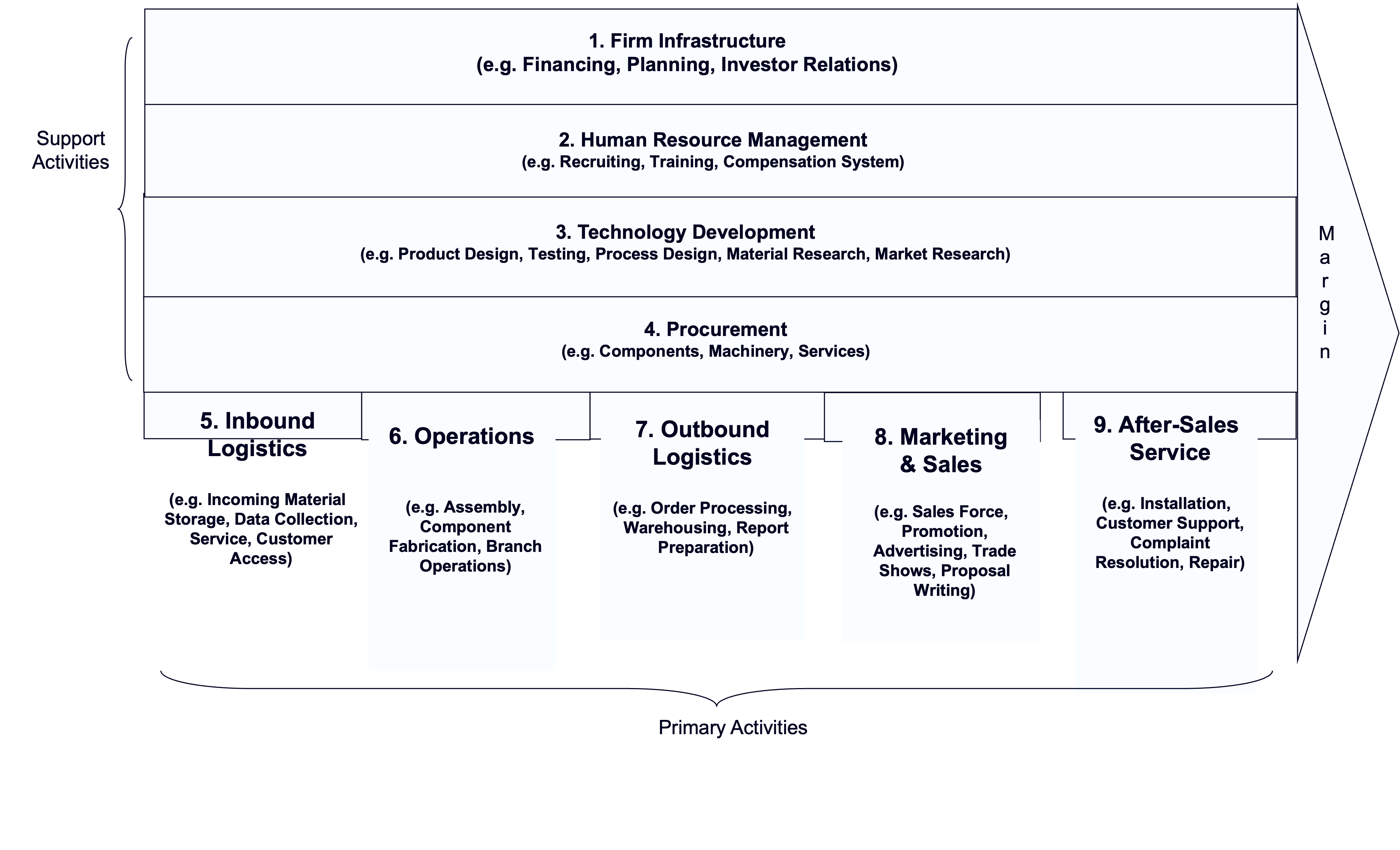
The Value Chain
Group Discussion: Student Cafeteria
Primary Activities
Inbound Logistics (receiving orders, storing ingredients)
Operations (cooking, food variety)
Outbound Logistics (delivery)
Marketing & Sales (discounts, ads)
Service (customer satisfaction)
Support Activities
Firm Infrastructure (funding)
HR Management (staffing)
Technology Development (online ordering)
Procurement (sourcing ingredients)
Group Discussion: Value Chain of Uber
Key Strategic Questions
Jeff Bezos: "What's NOT going to change in the next ten years?"
How can we ensure all relevant links in our value chain are analyzed? (Focus on revenue streams)
How do we allocate resources? (Focus on what is core to business supply and market demand)
Key Takeaways: Value Chain Analysis
Core Concepts:
System of Activities: A firm is a collection of discrete but linked activities.
Sources of Advantage: Competitive advantage (cost or differentiation) is found within these activities.
Primary vs. Support: Differentiating between core value-creating activities and those that enable them is key.
Focus on activities that are core to your business and market demand.
Use the value chain to analyze revenue and cost drivers in detail.
Understanding what NOT to change is as important as knowing what to change.
Case Study: The RealReal in 2022
Next, we will apply these concepts in a simulation focused on the luxury consignment marketplace, The RealReal.